Running a small business in 2026 is more competitive than ever. Advertising costs are rising, social media algorithms keep changing, and customer behavior shifts faster than most business owners can keep up with. Simply “posting online” is no longer enough.
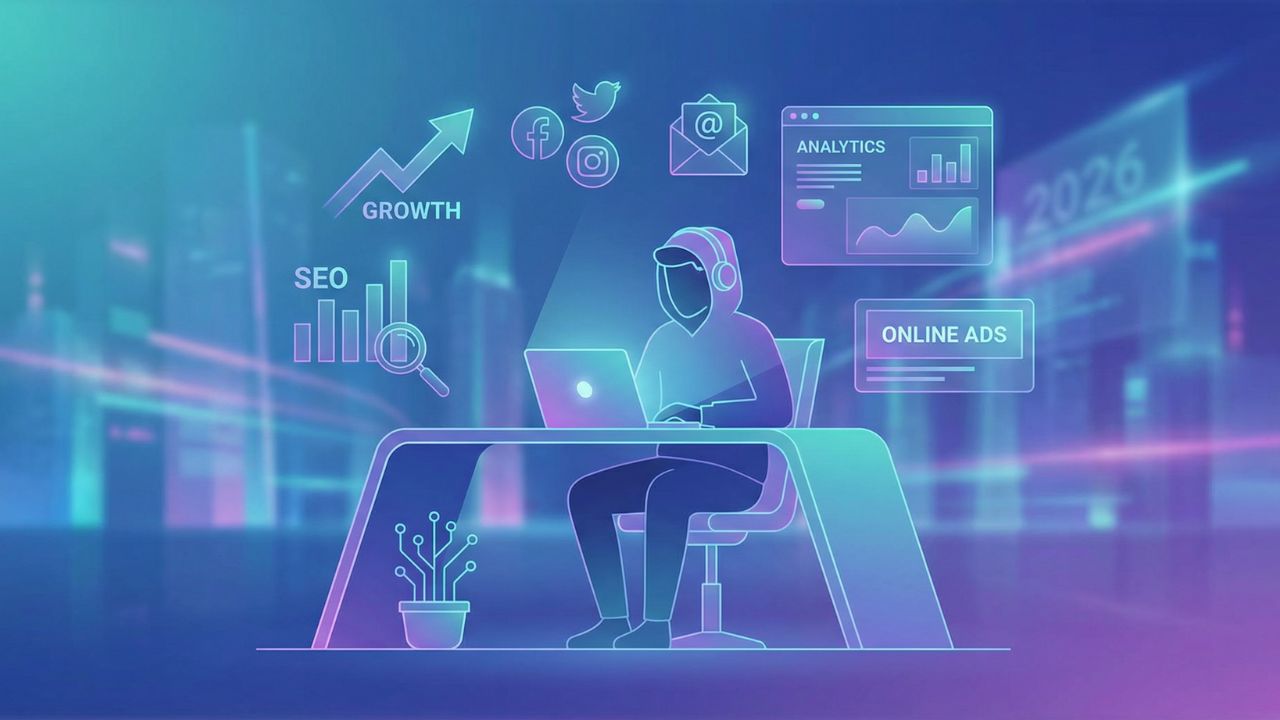
That’s why having a clear Digital Marketing Strategy for Small Businesses 2026 is not optional — it’s essential. A structured approach helps you use your budget wisely while maximizing results. From SEO and social media to email marketing and paid ads, every channel plays a role. The key is knowing how they work together to drive traffic, leads, and sales without wasting money.
Core Pillars of a Digital Marketing Strategy for Small Businesses 2026
A strong Digital Marketing Strategy for Small Businesses 2026 rests on four major pillars: SEO, social media, email marketing, and paid advertising.
SEO (Search Engine Optimization)
If your business doesn’t appear on Google, it might as well not exist.
Why SEO Matters
Most customers search online before buying. Ranking on Google brings consistent, high-intent traffic without paying per click.
Local SEO is Critical
For small businesses, local SEO is powerful. Optimizing your Google Business Profile, collecting reviews, and using location-based keywords can dramatically increase local visibility.
Basic SEO Breakdown
- On-page SEO: Optimizing titles, meta descriptions, keywords, and site structure
- Content marketing: Blogging, guides, FAQs
- Backlinks: Getting other websites to link to you
Budget Range
- Low: ₹8,000–₹15,000/month
- Medium: ₹20,000–₹40,000/month
- High: ₹50,000+/month
ROI Timeline
SEO typically takes 3–6 months to show measurable growth, but once it ranks, traffic is sustainable and cost-effective.
SEO Basics: Easy SEO Guide For Beginners
Social Media Marketing
Social media builds trust, brand awareness, and community.
Organic vs Paid Reach
Organic reach continues to decline. Paid promotion is often required for serious growth.
Best Platforms in 2026
- Instagram – Great for lifestyle, retail, and local brands
- Facebook – Strong for local communities and ads
- LinkedIn – Ideal for B2B services
Content That Converts
- Short-form videos
- Educational carousels
- Behind-the-scenes content
- Customer testimonials
Budget & Benchmarks
- Suggested budget: ₹5,000–₹20,000/month (ads + content)
- Engagement rate benchmark: 2%–5%
- Click-through rate (CTR): 0.8%–1.5%
Social media works best when aligned with your broader Digital Marketing Strategy for Small Businesses 2026, not as a standalone effort.
Email Marketing
Email remains one of the highest ROI channels in digital marketing.
Why It Works
You own your email list. No algorithm controls your reach.
List-Building Strategies
- Website pop-ups
- Lead magnets (free guides, discounts)
- Checkout opt-ins
Automation Basics
- Welcome sequences
- Abandoned cart emails
- Follow-up campaigns
Performance Benchmarks
- Open rates: 20%–30%
- Click rates: 2%–5%
- Conversion rates: 1%–3%
Cost vs Return
Email marketing tools can cost ₹1,000–₹5,000/month but often generate 3x–10x ROI.
Paid Advertising
Paid ads deliver faster results than organic methods.
Short-Term vs Long-Term
Paid ads generate immediate traffic, but they require continuous investment. SEO builds long-term equity.
Sample ₹20,000 Monthly Budget
- ₹12,000 – Ads
- ₹5,000 – Content
- ₹3,000 – Testing & optimization
Average CPC (Cost Per Click)
- Google Search: ₹15–₹40
- Facebook/Instagram: ₹5–₹25
- LinkedIn: ₹40–₹150
Average Conversion Rates
- Google Search: 3%–6%
- Facebook Ads: 2%–4%
- LinkedIn Ads: 2%–5%
Paid ads should support — not replace — your overall Digital Marketing Strategy for Small Businesses 2026.
Google Ads vs Facebook Ads vs LinkedIn Ads: Which Platform Wins?
There is no universal winner. It depends on your goals and audience.
Audience Targeting
- Google Ads: Intent-based (people actively searching)
- Facebook Ads: Interest and behavior-based
- LinkedIn Ads: Professional targeting (job title, industry)
Average Cost-Per-Click
- Google: Moderate
- Facebook: Lower
- LinkedIn: Higher
Conversion Rates
- Google: High due to search intent
- Facebook: Moderate
- LinkedIn: Strong for B2B leads
Best for B2B vs B2C
- B2C: Facebook & Instagram
- B2B: LinkedIn & Google Search
Ideal Business Types
- E-commerce: Facebook + Google
- Local Services: Google Search
- Consulting/Agencies: LinkedIn
The “winner” depends entirely on business goals, budget, and audience.
Sample Budget Breakdown for Small Businesses in 2026
Here’s a balanced monthly allocation:
- 40% Paid Ads
- 25% SEO
- 20% Social Media
- 15% Email Marketing
This mix works because:
- Paid ads bring quick traffic
- SEO builds long-term growth
- Social media strengthens brand trust
- Email improves retention and repeat sales
A smart Digital Marketing Strategy for Small Businesses 2026 balances short-term wins with long-term sustainability.
Measuring ROI: What Small Businesses Should Track
You can’t improve what you don’t measure.
Key Metrics
- Customer Acquisition Cost (CAC) – Cost to acquire one customer
- Return on Ad Spend (ROAS) – Revenue generated per ₹1 spent
- Conversion Rate – Percentage of visitors who take action
- Email Open & Click Rate – Engagement indicator
- Organic Traffic Growth – SEO performance signal
Keep tracking simple. Review monthly and optimize consistently.
Conclusion
In today’s fast-moving digital world, guessing your marketing approach is risky and expensive. A clear Digital Marketing Strategy for Small Businesses 2026 helps you allocate budget wisely, choose the right platforms, and measure real results. Focus on combining SEO for long-term growth, paid ads for immediate leads, social media for brand trust, and email for retention. Test regularly, analyze data, and refine your strategy every quarter. Consistency and smart optimization will always outperform random marketing efforts.
FAQ Section
What is the best digital marketing strategy for small businesses in 2026?
The best approach combines SEO, paid ads, social media, and email marketing. A balanced strategy ensures short-term sales and long-term growth while controlling acquisition costs.
How much should a small business spend on digital marketing?
Most small businesses invest 7%–12% of revenue in marketing. For startups, ₹15,000–₹50,000 per month is a common starting range depending on goals and industry.
Is Google Ads better than Facebook Ads for small businesses?
Google Ads works better for high-intent searches, while Facebook Ads excel at audience targeting and brand awareness. The right choice depends on whether your goal is immediate leads or audience building.
How long does SEO take to show results?
SEO typically takes 3–6 months to show noticeable growth. Competitive industries may take longer, but results are more sustainable over time.
What is the average ROI of email marketing?
Email marketing often delivers 3x–10x return on investment. Because you own your list, it remains one of the most cost-effective marketing channels in 2026.
Read More :
Stock Market Crashes Explained: How to Protect Your Portfolio (2026) – technixt.com
Top 10 Stocks to Watch in 2026: Blue-Chip vs. Mid-Cap Winners – technixt.com